One of my favourite parts of my job is working with a wonderful set of colleagues, and helping people out in all kinds of ways. This means I’ve ended up in a role where I’m in contact with a lot of people, and juggling helping out a lot of people, all with different priorities and deadlines and needs. I love thinking about communication, and communicating about communication, so I thought I’d write up some of my boundaries and guidelines for communicating with me at work!
Before I start, if you have any boundaries around communication, or particular ways you’d prefer I communicate with you, please do let me know! I will always aim to respect any boundaries and find mutually good ways of working together.
And firstly, whoever you are, you can call me Amy, no titles needed!
Across from me, a research volunteer is telling me about their week. As I’m assessing whether they qualify for our study, I internally smile at just how much I’m relating to what they’re saying. But it’s only afterwards, when I score their responses and realise yeah, they definitely meet the criteria for major depressive disorder, that it hits me. Oh. I look back at my day, my week, my month. Here I am again.
Those are the times working in mental health research can really help, where my environment and my training hasten that sharp, sudden bit of perspective: I need to do something.
Other times, it’s not so simple.
I have deliberately crafted my life around my mental health. Thankfully, my longest and darkest spells were back in my teenage years, but I’m all too aware of how comfortably my mind finds falling into that place. I cannot afford to not be vigilant. As I write this, I realise I can’t even imagine what that would be like. I am mostly content – and my reputation as someone who celebrates joy and affection is not unfounded! – but only because I work hard to keep that peace.
I am strict about the hours I work and stricter yet about the company I keep. I spent years transforming my relationship with my body and now carefully curate the people and media I interact with to protect that. My phone is well stocked with habit trackers to catch me when routines start slipping; alarm bells ring when I can’t find the motivation to even brush my teeth. And when I say that walking everywhere keeps me sane, I say it lightly, but I mean it deeply.
Most of these practices are things I’ve experimented with on my own, but knowing they’re supported by scientific evidence usually helps keep me on track. The literature on behavioural activation forcefully reminds me to keep moving and socialising when my mood dips. The clarity and simplicity of cognitive-behavioural frameworks nudge me out of avoidance when anxiety is holding me back. Part of what keeps the words of my psychologist ringing in my ear is how skillfully she could ground her advice in Acceptance and Compassion Therapy (ACT).
Inevitably, though, the practices I have so carefully cultivated sometimes falter, and I come crashing down. In that all-too-familiar darkness, my insight turns on me. I could write a great, well-referenced paper on all the reasons why I shouldn’t be lying in bed, staring into space, berating myself, but not only does that not stop me, it becomes a form of punishment. What the hell is wrong with me? I know exactly what will help and I’m just choosing to wallow. I tick off a checklist of cognitive biases – black-and-white thinking, jumping to conclusions, catastrophising – and yet every dark thought feels like incontrovertible fact. I’m fundamentally incapable of true connection with anyone. I’ll always be alone. I speak to myself in a way I would never speak to anyone else with depression, whether supporting them professionally or personally. Taking time off work is grossly indulgent – this misery is just a result of my weakness.
This dissonance between rational insight and what I feel to be true in every ounce of my being just makes me feel like I am going, very literally, insane. I can’t find a second of mindful detachment, can’t step back an inch, can’t let my feelings pass through me. I feel completely unrecognisable.
When that mental shift happens, everything feels different.
I’m plagued by questions about that distinction.
Is there a line between depression and those parts of life that are inherently difficult – struggles with motivation, the pain of self-criticism, occasional intense sadness?
If there is a line, is it a question of severity, or does the experience transform into something new?
Is my depression a part of me, or is it something separate and external that’s been imposed on me?
Is everything I’m experiencing “normal”? Am I overreacting?
Does answering any of these questions even matter?
It feels important. Not just scientifically or therapeutically. It feels important – no, utterly essential – to me. I desperately long for some perfect framework to help me understand it, understand myself, even just a little more. I know what my therapist would ask, and, no, Nicola, I’ve no idea what that framework would even look like. I still want one.
In bed, I scroll Twitter, reading endless threads of academics debating these very questions.
I resent every perspective I read.
I resent colleagues discussing serotonin receptor mechanisms that could not feel more irrelevant right now. I resent the very notion that some equation in a computational neuroscience paper could possibly be helpful to me. I resent psychodynamic therapists ascribing meaning to the pain I know is meaningless – this isn’t an ‘opportunity for growth’ and I want it gone. I resent anti-psychiatrists claiming that the pain I’m feeling shouldn’t be pathologised – I’m desperate for this all-consuming virus to be wiped out. I resent the people arguing that how I feel is just a response to capitalism or oppression, as if solving those problems would even make a dent. I even resent threads of other people describing their depression in ways that I can’t relate to.
By the time I reach “Top Five Tips for Well-Being”, I want to scream.
I close Twitter.
I’ve had incredibly painful experiences, ones that have changed and moulded me, and have taken time and support to heal from, but this feels different. Even in the worst of those times, I was still me. I could always see some of the good in my life, feel the love of those around me, and have some insight into my emotions. I still fundamentally liked myself.
This feels… indescribably different. I feel alien to even myself. Everything I value in myself, anything remotely loveable or worthwhile, I feel robbed of. I am utterly sick of myself, and my self-absorption. I switch between feeling a deathly numbness and a despair that makes my chest burn. I have no clarity and don’t absorb anything sensible that is said to me. My pain grows and grows and I fear I will never emerge from under it. I feel completely trapped. When I try to reach out, I find a way to feel more alone. Kindness becomes only more evidence that the people who say they love me don’t know me, not really.
I wonder how my research on negative bias – how a keyboard response to a facial expression – can possibly capture the cruelty of my own mind.
I make a series of incredibly depressing google searches, with highlights including ‘movies about teenage social rejection’, hoping to feel understood. Everything feels irrelevant to me.
I turn to my default comfort watch, Grey’s Anatomy, and see De Luca suffer through a depressive episode. As his colleagues try to intervene and lift his spirits, he cries out that he would give up every life he’s ever saved to just not feel like this anymore. I cry with him. It makes me feel more seen than any academic paper ever has.
As I write this, I hope that it just might make someone else feel seen, in a way my academic work may never do. Each time I start questioning whether I’m really going to share something so vulnerable, that hope keeps me going.
Talking openly about my own mental health has an extra weight to it. I worry that, in my moments of hopelessness, my lack of answers – as an “expert”- may feed the despair of others. I worry that this will be read not as my account of my experiences, but as a universal account of depression. Many of the people I love struggle with their mental health, and they all conceptualise it differently, wanting different forms of support, each as valid as the other. I worry that friends outside the field will take what I say as gospel, rather than one perspective among many.
I feel caught in the middle of the many ongoing battles in psychiatry. There are psychiatrists I respect, psychiatrists I love, psychiatrists who make me cringe, and psychiatrists who infuriate me (no, a few minutes of cheerful small talk doesn’t disqualify someone from having depression). Sometimes, those are the same people. In discussions about psychiatric diagnoses, medication, research trends, and NHS care, I take on different roles, trying to judge when to fiercely defend and when to aggressively criticise.
Writing this, I feel more caught in the crossfire than ever.
I worry about the response of my friends and colleagues within mental health. While I generally feel reassured of a level of understanding and validation, there’s a fear that I am particularly exposed in front of people who spend their life thinking about depression. I worry that I will become a case study, my behaviours monitored for symptoms. Oh god, I could be deemed a fraud. I think of other scientists reading this and worry that I should be adding citations. And there is an unfortunate reality that even those most qualified don’t always get it. I return from a period of sick leave for depression and get asked if I feel better – “what with all the bugs going around”. I don’t know what to say. It’s well-intended and I love my workplace and I know I have it better than most. I’m sure I’ve done the same thing. It’s still… tiring.
Finally, I worry that what I’ve written will be picked apart or used to further some agenda, because this is not a clear-sighted critique. When I feel ‘well’ (what word should I even be using?) I can see the value of the same perspectives I resented while in the middle of it. I can feel a sliver of compassion for the very same parts of me I hated. Maybe that Amy isn’t quite so incomprehensible. But I honestly can’t tell if this is true insight, or if I’ve simply already forgotten just how sadistic my mind can be.
I have no answers or conclusions or even suggestions. This is just one attempt to articulate one (thankfully temporary, if recurrent) experience.
Of course, the situation I find myself in is not a coincidence and you’ve heard it before. My story is that of countless others in this field: a depressed teen, wanting to help others like her, studies psychology. She worries that clinical work is too much for her own mental health and falls in love with research instead.
Sometimes it feels like I’ve trapped myself. One day, after struggling to get out of bed, the journal club topic of the day is social isolation and it feels almost too much to bear. I wish I could laugh but can’t so I cry. I thank my lucky stars I’m watching on Zoom.
But then, another day, not long after, I realise I feel… okay. I don’t know why, or how long it will last. A week or so later, I think I actually feel happy. And there’s no neat narrative to where I am now, but maybe I’ve found some solace. When my head is dark and I loathe the part of me that led me there, I desperately wish I had a magic wand, to be free of it – screw all the philosophy about meaning in the suffering or the empathy it provides, I’ll gladly sacrifice that. Truly. But, as things lighten, I can just about see something. I see my day-to-day research in a subtly altered light, see with striking, personal clarity the way that an ambiguous face can appear terrifyingly critical. And, emerging, I can see how what I fear – never being free of that darkness – grounds me, teaches me, and motivates me to keep going. How it keeps me connected to the people I’m trying to help. Maybe this is what keeps alight, year after year, the flame that drove me into this field. And in lieu of a magic wand, these frayed threads of silver linings, offering a little peace, will have to do.
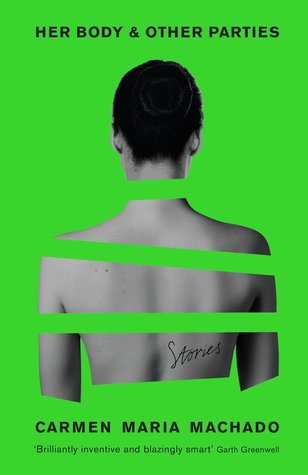
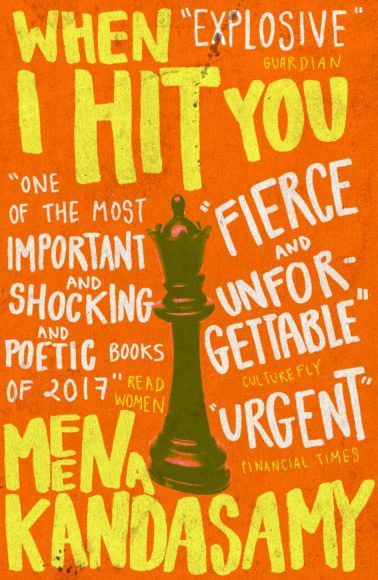
Something slightly different – a round up of my reviews for books I’ve read in the first half of this year, highlighting my top recommendations and one my favourite genres – books with young, supposedly “unlikeable” female protagonists in messy relationships!
(For those of you who already religiously follow my goodreads reviews, this post will be pretty redundant! For those who would like to religiously follow me on good reviews, find me here! I’ll also do another round up at the end of 2018, for the second half of the year.)
This is the second blog providing a “friendly overview” of a systematic review I co-authored on biological predictors of clozapine response, which has recently been published in Frontiers Psychiatry. In the first, I explained why predicting response to clozapine is important and gave a brief explainer of what systematic reviews are. In this one, I’ll explain how we conducted our review, and the key messages from our findings.
Obviously you can find all of the detail in the paper itself, but this is primarily aimed at non-scientists or people outside of the field. If anyone is interested in more detail of a particular aspect, I’ll happily write a follow up on certain aspects or answer questions in the comments/on Twitter!
After (too many…) years, a systematic review I co-authored on biological predictors of clozapine response has recently been published in Frontiers Psychiatry, so I’m going to do two posts giving a “friendly overview” of the paper. In this one, I’ll outline why predicting response to clozapine is important and give a brief explainer of what systematic reviews are. In the second, I’ll explain how we conducted our review, and the key messages from our findings.
Obviously you can find all of the detail in the paper itself, but this is primarily aimed at non-scientists or people outside of the field. If anyone is interested in more detail about a particular aspect, I’ll happily write a follow up on certain aspects or answer questions in the comments/on Twitter!
For those of you doing PhDs, whether your thesis submission is a few years away or a few months away, I thought I’d pass on some “wisdom” about the whole process (most of which is just how to avoid my mistakes…!) – from planning to mindset to little technical things. I read a lot of advice which sounded great but seemed very idealistic and sometimes just scared me – I’m hoping this is a bit more grounded and reassuring. Some of these tips may be broadly useful to other projects or pieces of academic work or writing, but it is quite focused on writing a PhD thesis, which I found a very different process to any previous academic writing – partly just due to the length!
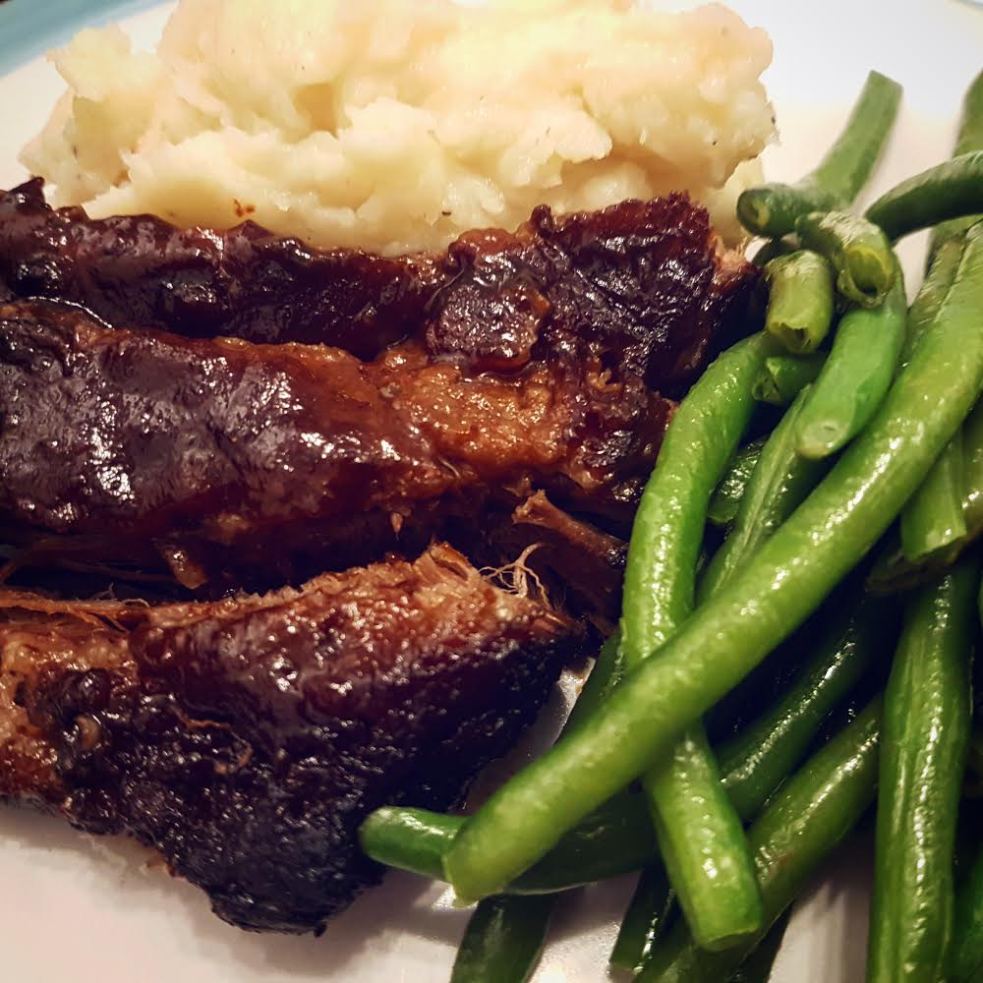
Firstly I’ll say that compared to my last recipe, this is a lot more relaxed. It’s my favourite kind of chuck-it-in-a-pot dish with lots that you can personalise; you can improvise and use whatever looks good in your cupboard, and nothing is too essential that if you realise you’ve run out it’s a disaster (well, other than the brisket). So if the technique of my cherry pie seemed a bit intense, don’t worry, most of my recipes will be more like this…
I’ve wanted to write an intro to “epigenetics” for a while, because when I was trying to learn about it for the first time, I found most things fell into two camps: either mainstream press with lots of hype but not much detail or jargon-filled explanations aimed at hardcore biologists with lots of prior genetics knowledge. As someone who started my PhD with little understanding of genetics, it took me quite a while to piece together information with enough detail to properly understand all the terms but not so much detail that my brain felt like melting. I wished there had been one resource which talked me through at least the basic ideas from start to finish, without assuming a tonne of knowledge beforehand – and so that’s the aim of this series of posts! For people new to genetics, this will be a crash course in all the key things to know. I will use some of the jargon so that you can learn the words, but try not to get bogged down in it – you don’t need to remember it all and I will try to explain everything as I go. Leave me a comment if I need to explain something further! For people familiar with genetics, this will probably cover a lot of old ground and you might want to just skim it then read the extra resources at the end!
So, my fiance had been hinting about cherry pie for… years but pastry is something I have no real experience with and it’s always scared me a bit. But over Valentine’s week I wanted to do something special, so I hunted down these recipes on Serious Eats, adapted them slightly and I was really happy with the results (if we forget about the fact the crust slightly burnt…). This may well be the most elaborate recipe I post because it’s pastry BUT (for pastry) it’s pretty relaxed which I like – expect the rest of my recipes to be more low key.
There is often this unspoken concept of the “true scientist” : the person who is wholly dedicated to their science. Science is all they talk about and they never take a day off. They eat, sleep, breathe science and it isn’t “work” for them because it’s their passion, their life’s mission. They’d never resent working late because it’s all they want to do. They’d move across the world to do their research – there’s no sacrifice too big to pursue their thirst for science. They’re also probably a white middle-class straight guy – but that’s a story for another blog post…
Now, I love doing psychiatric research – I frequently feel ridiculously lucky to get to do the work I do and genuinely can’t imagine a more rewarding or exciting career. And yes, I definitely get swept up in analysing new data or reading around an area that I want to try to get to the bottom of and I will happily spend an evening chatting away about my work. And yes, when necessary, work takes over and I don’t have space or time for much else (apologies to everyone I ignored during the last month of my PhD!). But, science isn’t my whole life – I spend a lot of time thinking about other things and doing other things!





 brain of neongolden